


Blog
How RTLS is Powering Smart Hospitals in Saudi Arabia Under Vision 2030

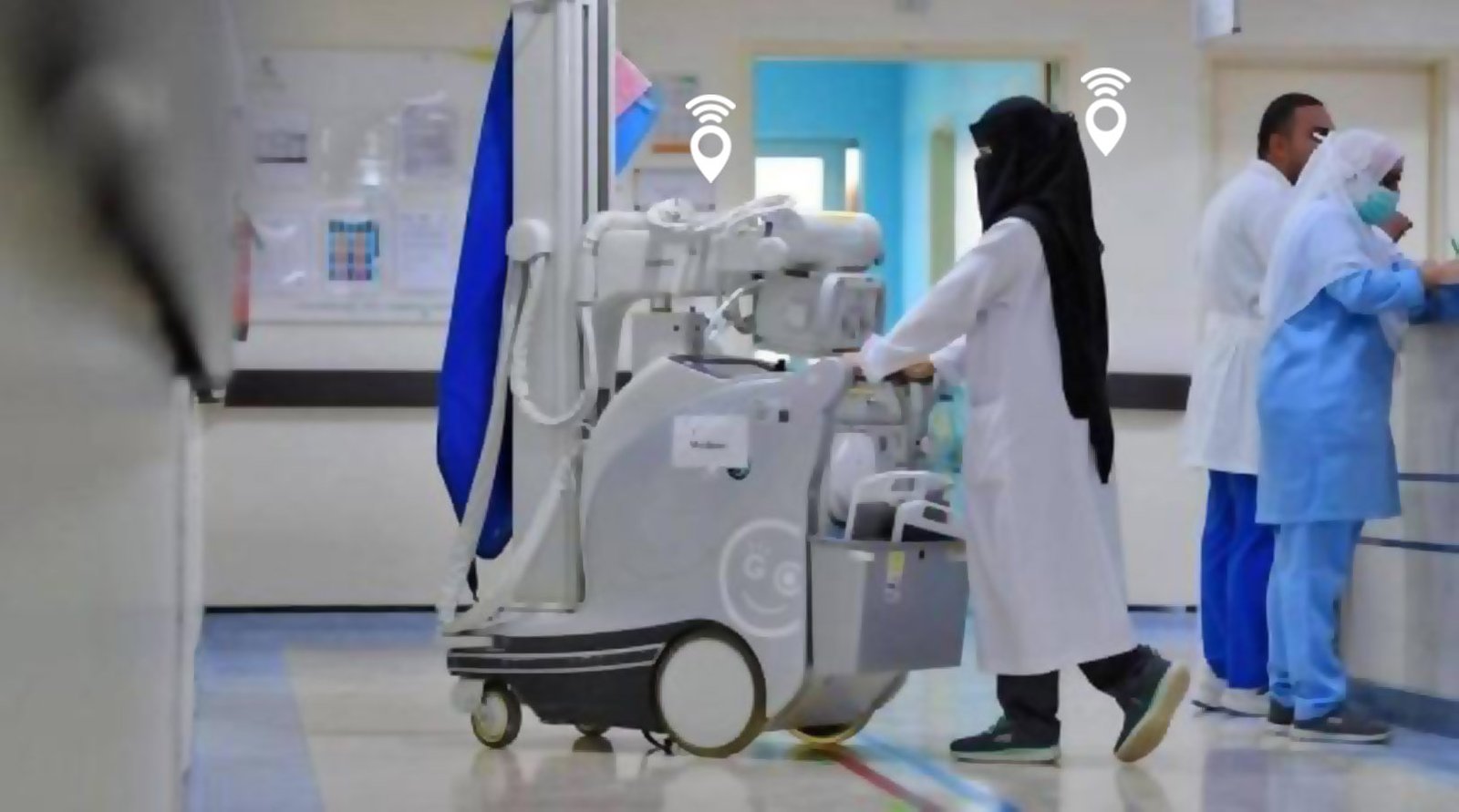
Introduction
Saudi Arabia is undergoing a healthcare revolution as part of Vision 2030, aiming to build world-class, patient-centered facilities through the Health Sector Transformation Program. The smart hospitals market in the Kingdom is exploding, from $674 million today to a projected $1.77 billion by 2030, fueled by demands for digital efficiency and seamless care delivery.
At the heart of this shift lies real-time visibility. Real-Time Location Systems (RTLS) provide the foundational intelligence hospitals need to track assets, staff, and patients instantly, turning data into actionable insights that drive smarter operations.
Vision 2030: Healthcare Transformation Goals
Vision 2030 prioritizes digital hospital infrastructure, integrating IoT sensors, AI analytics, and remote monitoring to create efficient, predictive care environments. Key goals include reducing wait times, boosting resource utilization, and enabling data-driven decisions.
This demands automation and real-time intelligence, enter RTLS. By delivering precise location data across entire facilities, RTLS powers the connected ecosystems essential for Vision 2030’s smart-hospital ambitions, from automated workflows to proactive patient safety.

Why RTLS Fits the Smart Hospital Agenda
Sentrax RTLS stands out with its scalable BLE hybrid model, combining Bluetooth Low Energy (BLE) for cost-effective coverage with advanced tech for precision. This enables faster deployment—often in weeks, not months, and lower total ownership costs compared to legacy UWB systems.
Its hybrid approach leverages RSSI (Received Signal Strength Indicator) for broad visibility and AoA (Angle of Arrival) for room-level accuracy up to 3 meters. The result? Building-wide tracking that’s reliable, interference-resistant, and ready for Saudi hospitals scaling from 500 to 5,000 beds.
High-Value Smart Hospital Use Cases
Sentrax RTLS powers 15 proven capabilities, each tailored for KSA hospitals. Here’s how they deliver:
- Real-time Patient Location and Flow Management:
Track patient tags across ED, wards, and clinics to visualize bottlenecks, cut delays by 25%, and optimize staffing—directly supporting CBAHI patient flow standards. - Staff Location Tracking and Response Optimization:
Nearest-clinician alerts via SOS badges shorten emergency responses to under 2 minutes, boosting CBAHI safety metrics. - Equipment and Asset Tracking:
Locate IV pumps, monitors, and wheelchairs instantly, reducing rentals by 30% and ensuring point-of-care availability. - Automated Check-in and Smart Wayfinding:
Trigger digital check-ins and guide patients via apps/signage, minimizing wrong-location errors and enhancing patient experience. - Duress and Emergency Response Support:
Wearable SOS tags send room-level alerts to nurse-call/security, meeting staff-protection requirements. - Neonatal and Pediatric Security:
Geo-fenced tags on infants trigger alarms at unit boundaries, aligning with CBAHI neonatal safety protocols. - Room-Level Utilization and Capacity Analytics:
Monitor OR/ICU occupancy for dashboards that optimize capacity and support Vision 2030 efficiency. - Environmental and Storage Monitoring:
IoT alerts for temp/humidity in pharmacies/blood banks ensure CBAHI storage standards. - Workflow-Driven Alerts and Rule-Based Notifications:
Auto-alerts for overdue procedures or misplaced gear standardize care pathways. - Maintenance, Recall, and Equipment Lifecycle Management:
Track service zones to automate CMMS workflows, cutting downtime by 40%. - Fall-Risk and Wandering-Patient Monitoring:
Detect unusual patterns in geriatric units, preventing incidents per CBAHI risk criteria. - EHR and HIS Interoperability:
Stream location data into systems, reducing manual entry and enabling Vision 2030 data governance. - Security and Visitor-Access Control:
Monitor badges for unauthorized access, layering over existing systems for robust physical security.
These integrate via Sentrax’s open APIs, creating a unified smart-hospital layer.
Alignment With CBAHI ESR Outcomes
Sentrax directly advances CBAHI ESR across key areas: patient safety (e.g., falls, wandering), emergency response (SOS/duress), infection control (zones/hygiene), and identification (check-ins/security)—streamlining accreditation.
Why BLE Hybrid RTLS is Ideal for KSA Hospitals
Budget-friendly (50% lower costs), scalable to multi-sites, and easy to integrate—perfect for KSA’s diverse facilities.
Conclusion
In Saudi Arabia’s race to Vision 2030, Sentrax RTLS isn’t just technology—it’s your strategic edge for CBAHI compliance, operational excellence, and patient-centric smart hospitals. Unlock 20-40% efficiency gains, real-time safety, and future-proof scalability today.